
Understanding Hood County Releases
“Released” marks the end of one agency's custody, but it does not always mean freedom from all custody. Hood County Jail may release a person after bond, a judge's order, dismissal, sentence completion, or credit for time served. The jail may instead turn that person over to the Texas Department of Criminal Justice (TDCJ), another county, a federal agency, or immigration authorities. That handoff ends Hood County's physical control while confinement continues elsewhere. The Sheriff's booking and release record is the best local source for telling those events apart.
The Hood County View Bonds report is a live current listing, not a released-inmate archive. Once a row is gone, the page does not say whether bond, sentence completion, transfer, a hold, data correction, or lag caused the change. Court and release records remain useful after the row disappears. State, federal, and immigration systems apply only when the custody path reaches those agencies.
A missing name is a clue, not proof of community release. Confirm the actual event and any receiving agency.
Hood County Release Paths
Each release path creates a different trail. Bond permits release while a case remains open. Time served means a local term has been met, often with credit stated in the judgment. Probation, called community supervision in Texas law, generally keeps the person in the community under court conditions. Parole and mandatory supervision follow state imprisonment. Transfer is continued custody, not community release.
| Custody event | Meaning | Best next record |
|---|---|---|
| Bond release | Local custody ends while the case continues. | Sheriff release sheet and court docket |
| Time served or order | A sentence, credit, dismissal, or judge's order authorizes release. | Judgment or order plus actual jail release time |
| Probation | The court orders community supervision. | Clerk file and Hood County CSCD |
| TDCJ transfer | County custody ends and state incarceration begins. | TDCJ offender search |
| Parole or mandatory supervision | A state prisoner leaves confinement under oversight. | TDCJ status and Parole Division |
| Other agency pickup | Another county, federal agency, or ICE assumes custody. | Destination and receiving system |
- Discharge
- Completion of a sentence or supervision obligation.
- Detainer
- A basis for another authority to take custody when the current hold ends.
- Time served
- A sentence met by time already spent in custody, subject to the court's credit.
- Mandatory supervision
- A Texas state-release process governed by eligibility rules and, for many cases, Board review.
Hood County Release Record Fields
A narrow request for the booking and release sheet can establish facts omitted from the public bond report. Use the full name, birth date, booking or report number if known, incident date, and a tight date range. Ask for maintained fields rather than asking the Records Division to explain why an event occurred. The Sheriff provides existing records, not newly created research or legal analysis.
| Requested field | What it can establish |
|---|---|
| Booking number and identifier | Connects the correct person to the custody event. |
| Booking date and time | Marks entry into the jail process. |
| Actual release date and time | Documents when Hood custody ended. |
| Release type or disposition | Distinguishes bond, sentence completion, order, or transfer when maintained and public. |
| Releasing authority | Identifies the source tied to the event. |
| Destination or transfer agency | Shows whether another custodian received the person, if disclosable. |
| Booking photograph | Links the intake image to the booking, not to current status or guilt. |
Pair the jail event with the court disposition. The jail record proves physical movement; a judgment, dismissal, bond order, or later order explains legal authority. A court entry may predate the door time, while an IVSS alert may reflect a processed change without supplying the Sheriff's full release code.
Request Hood County Release Records
The Sheriff's Open Records Request page supplies the right law-enforcement channel. Email or mail must reach the listed Records Division address to trigger the agency's response duty. No Hood-specific flat release-sheet or booking-photo price was published in the research. Texas cost rules apply to allowed copy and labor charges, so wait for an estimate rather than assuming a fee.
- Identify the person and booking with a full name, birth date, incident date and place, number, and exact period.
- Name existing records: the booking/release sheet, custody history, actual release time, release type, authority, public destination field, and photograph as needed.
- Choose email, mail, fax, or in-person delivery through the listed Records Division.
- Keep the response. If it says transfer, continue with the receiving authority.
- Match the event to the misdemeanor or felony court file.
400 Deputy Larry Miller Drive
Granbury, TX 76048
pialaw@hoodcounty.texas.gov
Fax: 817-573-7372
The Texas Public Information Act governs access, exceptions, and cost procedures. Retention is not the same as online display. A record can remain after the bond row is gone. Expunction under Code of Criminal Procedure Chapter 55A can require destruction or return of covered records. Nondisclosure under Government Code Chapter 411 generally limits public disclosure without erasing every record. The exact court order controls.
Texas Rules for Hood Releases
Chapter 552 creates the public-request framework, but it does not make every jail field public. Exceptions, confidential identifiers, juvenile rules, and an applicable court order can change what is disclosed. The Attorney General's PIA materials explain the process, while 1 Texas Administrative Code Chapter 70 supplies state cost rules.
Access also depends on the right custodian. Hood Sheriff holds booking and release events. Granbury Police keeps its own police reports. The County Clerk handles misdemeanor court material, and the District Clerk holds felony files. TDCJ maintains state-prison data. One broad request sent to the wrong office can produce an accurate “not held” response without answering the custody question.
Collect Hood Inmate Property
Hood County has a specific inmate property release procedure. The person in custody completes a form naming the recipient. The collector shows government identification and signs. Pickup is unavailable during meals, shift changes, or visitation, and the Sheriff advises calling booking at 817-579-3333 before travel.
This process covers property handed to a third party while the owner remains in custody. It does not describe the automatic return of belongings when the owner is physically released. A signed property pickup is therefore not proof that jail custody ended.
Match Hood Release Court Records
Hood County divides criminal files by case level. The County Clerk court search covers misdemeanors. The 355th District Clerk is the felony source. Court fields may include cause number, charge, docket events, disposition, judgment, sentence, jail credit, supervision terms, warrants, and later orders. The Sheriff expressly says it does not supply court dispositions.
The two records answer different questions. The jail record supplies the actual custody exit or transfer time. The clerk file shows the legal result. A dismissal does not state the exact door time, and a jail code does not replace the judgment. Together they provide stronger confirmation.
Find Released Hood County Inmates
Start with the system that last held the person. Hood County has no distinct official recent-release feed, so the 24-hour release list path begins with a jail check and a precise request. Use names, dates, and agency identifiers to avoid a false match. Follow any transfer instead of treating the end of one roster row as the end of custody.
- Check Hood View Bonds. Presence supports a current local listing at that moment; absence requires follow-up.
- Call jail booking at 817-579-3333 and ask whether custody ended by community release or transfer.
- Check Texas IVSS-Counties for a current event or saved notice, while treating it as corroboration.
- Search TDCJ if state transfer or a prior prison sentence is possible. Read status, facility, dates, and discharge together.
- Use the County Clerk for misdemeanors and District Clerk for felonies.
- Use BOP, ICE, or the federal docket only when the case or destination points there.
- Request the Sheriff's booking/release record for direct local evidence.
Why did the name vanish? Current lists show current custody or bond activity, not permanent history. A person released on bond and one transported to another jail may both disappear, though only one returned to the community.
TDCJ Hood Release Search
The TDCJ Online Inmate Search applies when a Hood case reached state custody. Search by last name with at least a first initial, TDCJ number, or SID number. Gender and race can narrow a name search. A state record may remain after discharge, making it different from Hood's live report.
| Field | Use | Limit |
|---|---|---|
| Name | Broad person search | Compare identifiers |
| TDCJ number | Direct state lookup | TDCJ records only |
| SID number | Texas identity lookup | Not a Hood booking number |
| Projected release date | Current sentence calculation | Not an actual exit |
| Facility and status | State placement or status | Confirm discharge or supervision |
The official TDCJ detail view shows sentence, status, maximum-date, projection, and parole-eligibility fields.
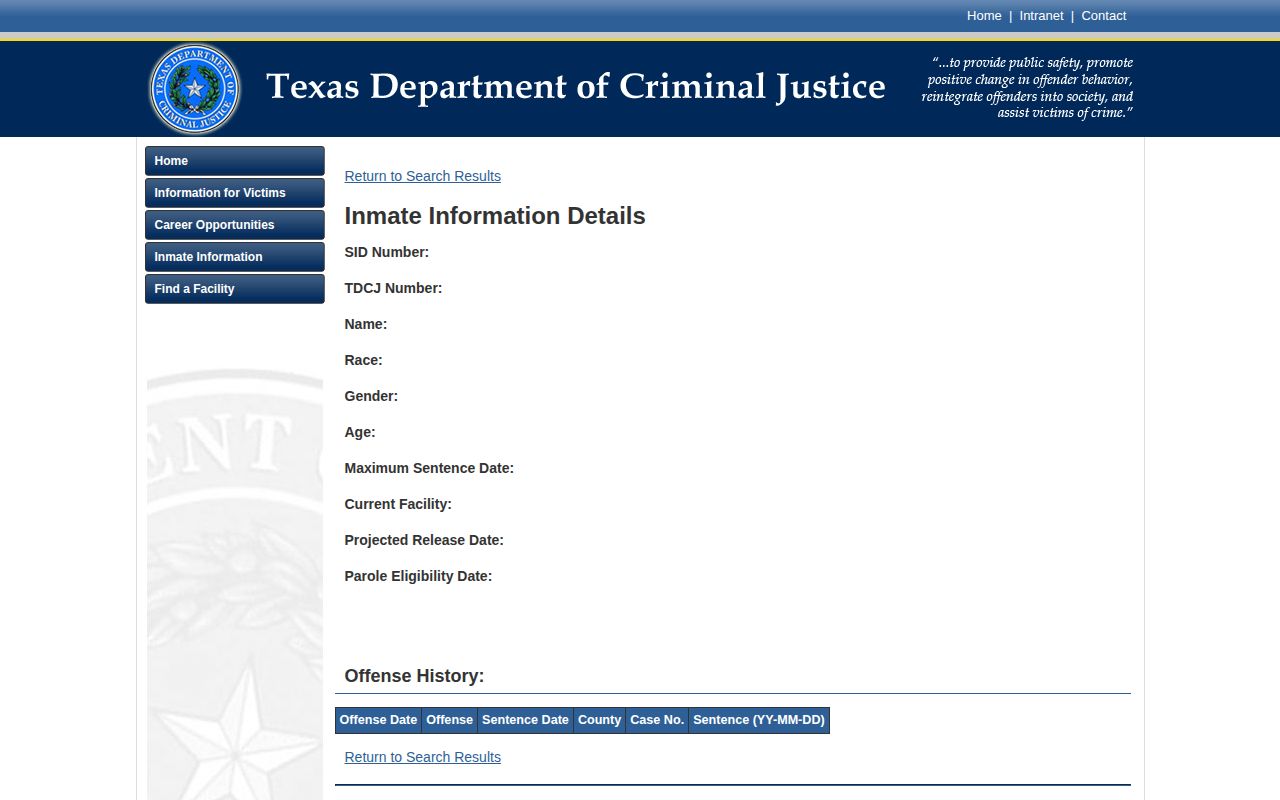
Read each field as a separate milestone. Eligibility means consideration is possible. A projected date is a calculation. A scheduled date may change. Actual release, supervision, or discharge requires the final status and responsible office. See Projected Release Date for the Texas calculation rules.
Hood Recent Release Limits
No official Hood 24-hour or 72-hour release feed was found. View Bonds contains name, race, sex, and book date. Its detail adds a photograph, descriptors, arrest and booking data, offenses, class, and bond. It has no release date, time, reason, destination, or release window. Do not relabel it as a release list.
The official current report pictured below supports a point-in-time check, not a historical conclusion.
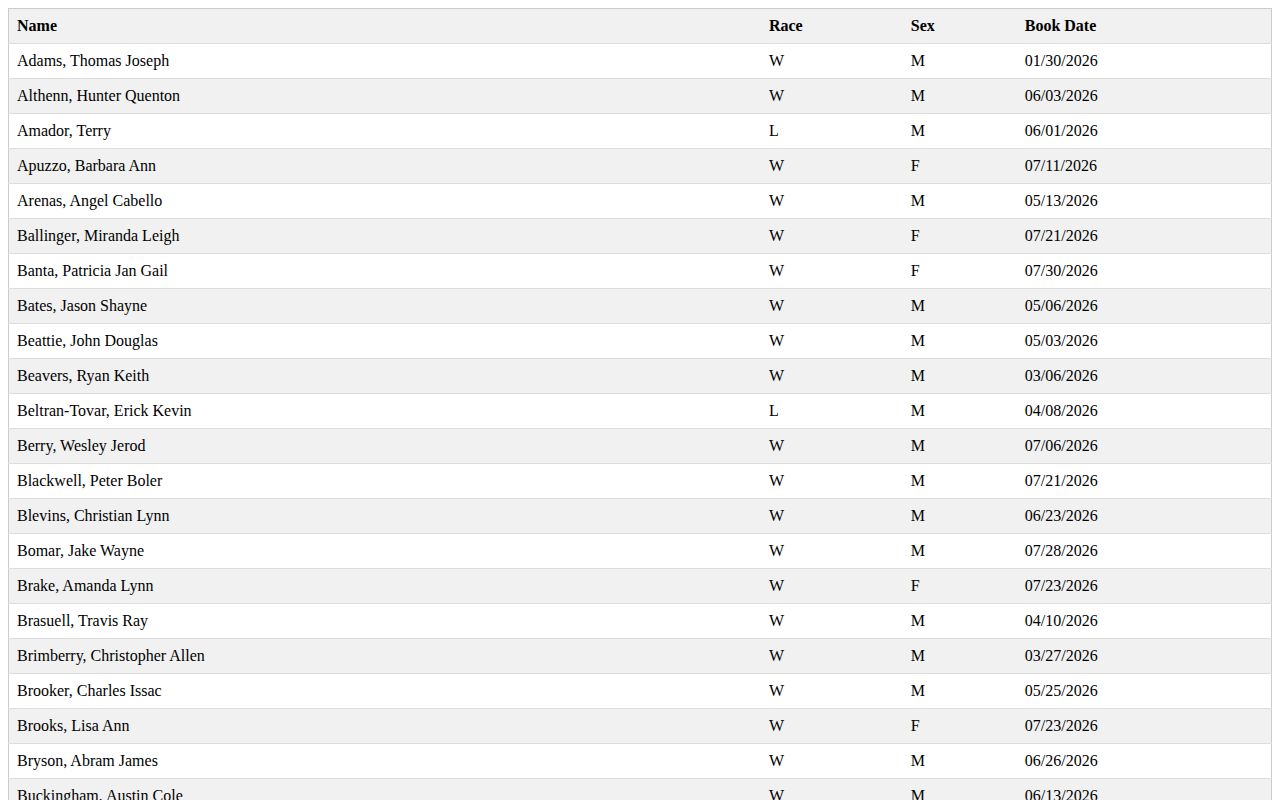
For a defined interval, request an existing release log or export with exact start and end times. A 72-hour request should state the period rather than ask for “recent releases.”
Verify Hood Release Supervision
Parole follows state imprisonment and is handled by TDCJ Parole Division, with decisions made by the Board of Pardons and Paroles. Hood County is assigned to the Mineral Wells District Parole Office. Probation is court-ordered community supervision handled through Hood County CSCD. The two systems have different records and discharge events.
Use the TDCJ record and Parole Division for parole or mandatory supervision. Use the sentencing court and Hood County CSCD for probation. An absconder is someone reported as failing to remain in contact or comply with supervision; it is not the same as a new conviction. See Parole and Probation for verification steps.
Hood Release Alerts and Transfers
Texas replaced county VINE participation with Texas IVSS-Counties in 2025. Search one person by name or an available DOC, SID, jail, or booking identifier, then compare identifiers. Registration can provide available custody, transfer, release, or court notices. An alert is useful evidence, but it is not the Sheriff's release sheet. “Not found” is weak evidence because released people may disappear from results.
Federal paths remain separate. The BOP Inmate Locator may show “Released,” a date, or “Not in BOP custody.” A BOP date ends BOP custody but does not rule out supervision or transfer, so compare the federal docket. For an immigration hold, use the ICE Online Detainee Locator for current detention. Neither is a historical Hood release archive.
The official BOP locator below shows the federal search and released-result format.
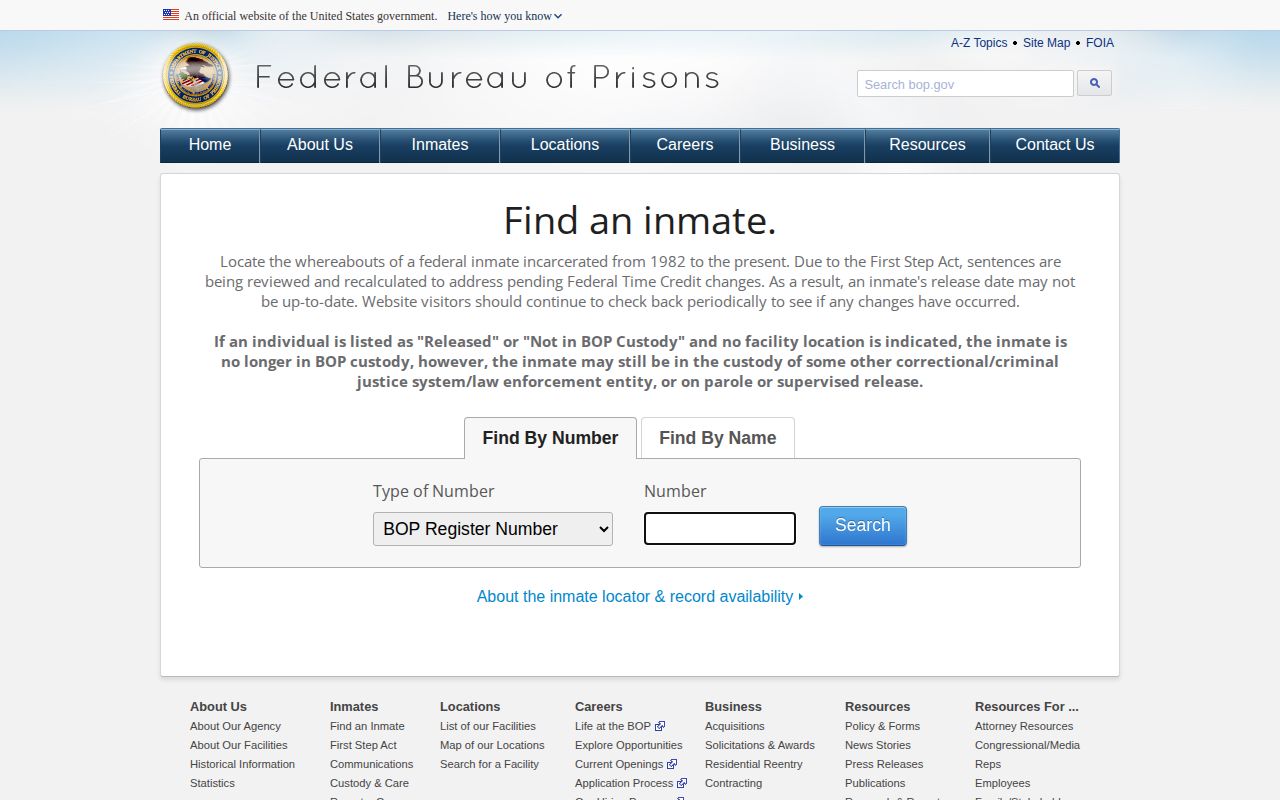
Use federal tools only when a federal case, detainer, or receiving agency supports that path. A county-to-federal handoff is continued custody until the federal record says otherwise.
Compare Hood Custody Records
Evidence strength depends on what each record was built to show. Use these channels together rather than forcing one source to answer every question.
| Channel | What it supports | What it cannot prove alone |
|---|---|---|
| Hood View Bonds | Current local listing when observed | Why a missing person left |
| Sheriff release sheet | County event, time, and code if maintained | Full legal outcome |
| County or District Clerk | Judgment, order, sentence, and disposition | Exact door time |
| Texas IVSS | Processed custody or notice event | Full release sheet or all holds |
| TDCJ record | State custody, dates, facility, or discharge | Local booking event |
| BOP or ICE | Federal-system custody data | Historical county detail |
For county custody, combine the Sheriff booking/release sheet with the court file. For state custody, read actual TDCJ status with Parole Division supervision or discharge. Projected dates, eligibility dates, votes, and scheduled dates are intermediate events. Third-party lists and cached results are only leads.
Hood Contract Jail Return
A 2025 Hood and Burnet housing agreement documents a local custody wrinkle. Hood prisoners housed by Burnet must bond in Hood County and return to Hood's facility for release. Departure from the host jail can mean transport into Hood custody, not release to the community. Confirm the host movement, Hood hold, and Hood's final event.
This sequence is a reason to note the time and office contacted. Host-roster absence proves little. The originating case and final physical custodian must agree before community release is confirmed.
Where Hood Records Live
The current Hood County Jail was built in 1995 and is the modern custody contact. The earlier jail at 208 North Crockett operated from 1886 through 1978 and is now the Old Jail Museum. It preserves local history, not current booking or release records.
Direct present checks to the Sheriff, Records Division, court clerk, or receiving system. Historic buildings can explain the county's past while having no role in today's verification.
Hood County Release Systems
Hood County has one published county jail, plus local and outside systems that may touch a custody path. Choose the last physical custodian.
- Hood County Jail: confirm bond, order, sentence completion, or transfer through booking and Sheriff records.
- Granbury Police Department holding/booking pathway: request city arrest data there, but confirm continuing custody through Hood Jail.
- Hood County out-of-county contract beds: reconcile host movement with the Hood hold and final return.
- Texas Department of Criminal Justice facilities statewide: use TDCJ for state transfer, parole, supervision, or discharge.
- Federal Bureau of Prisons facilities nationwide: use BOP and the federal docket.
- Immigration detention facilities: use ICE tools after an immigration handoff.
No TDCJ prison, BOP institution, or ICE detention center was identified inside Hood County. Those are follow-on systems, not local locations. Follow the receiving agency until actual release or discharge is confirmed.