
Hood County 72-Hour Release Options
No official Hood County Sheriff page lists everyone released during a rolling 72-hour period. The online View Bonds report shows current bond information. It does not expose a release date, release reason, destination, or three-day filter. A row’s absence cannot prove that the person entered the community.
A three-day review can still be built from official records. Define the exact start and end times, call Hood County Jail booking at 817-579-3333 for a named person, review the court event, and request an existing release log or booking/release record for that interval. This method is useful when the period crosses a weekend.
Check Hood County Three-Day Releases
Use a fixed interval instead of “the last three days” without dates. Midnight Friday through midnight Monday differs from a rolling 72 hours begun Monday afternoon. Clear bounds help the Sheriff locate a maintained export without creating a new report.
- Write the full name, date of birth, booking number if known, and exact date-time range.
- Observe View Bonds and note when the name was present or absent.
- Call booking to distinguish Hood custody, community release, and transfer.
- Review Texas IVSS-Counties for a custody event and read its event type.
- Check the misdemeanor County Clerk or felony District Clerk docket.
- Ask Sheriff Records for the existing log or named booking/release sheet.
The Hood County released-inmate search supplies the full named-person chain when the route extends beyond three days.
Hood County Three-Day Record Fields
Visible current fields and requested release fields answer different questions. Never relabel a book date as a release date.
| Field | View Bonds | Release request |
|---|---|---|
| Name, race, sex | Shown | Identity aids |
| Book date | Shown | Identifies custody episode |
| Photo and detail | Current row | Request if maintained |
| Actual release date/time | Not shown | Request explicitly |
| Release type/authority | Not shown | Request maintained field |
| Destination/transfer agency | Not shown | Request if public |
The row detail also includes arrest facts, descriptors, offenses, class, and required bond. Those items describe booking and bond, not release within the chosen 72 hours.
The official Hood County current report appears below to make that limit clear.
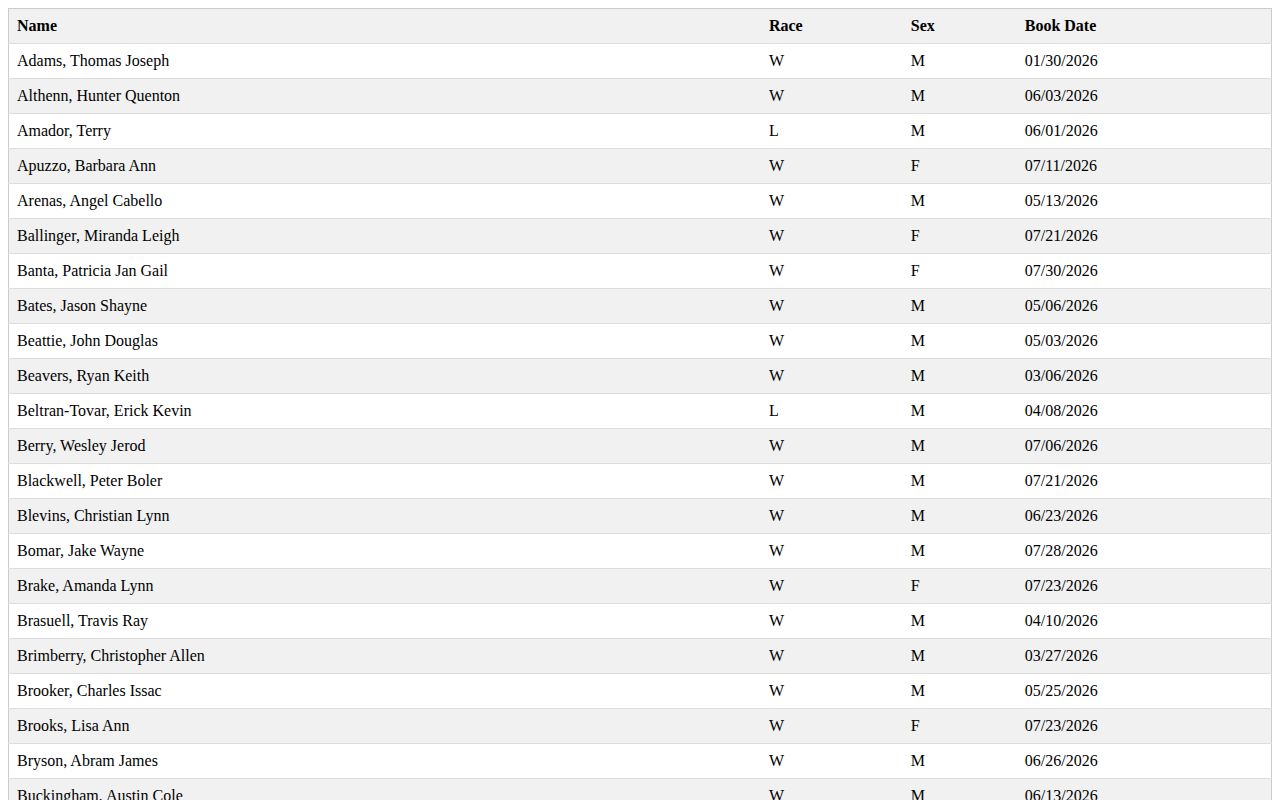
Its title and fields support a current observation, not a three-day release history.
Hood County Weekend Release Checks
The Hood County Jail line is available around the clock, making it the first named-person check when clerk offices are closed. A court action, bond approval, data update, and physical exit can occur at different times. A wider period catches timing gaps but cannot prove an event absent from the report.
When offices reopen, compare the jail answer with the court docket. County Clerk records cover misdemeanors. District Clerk and the 355th District cover felonies. The Sheriff says court dispositions are held elsewhere. A docket may show authority, while the Sheriff’s release event is better proof of actual exit time.
Note: Record the time of each phone and portal check so a later update does not erase the observation’s context.
Request Hood County Release Logs
Use the Sheriff public-information instructions to seek an existing record. Send it to pialaw@hoodcounty.texas.gov, fax 817-573-7372, or the Records Division at 400 Deputy Larry Miller Drive, Granbury, TX 76048. The Sheriff says requests should describe records rather than ask broad questions.
Supply names, birth dates, known booking numbers, relevant places, and the precise interval. Ask for the release log or custody-event export, actual release date and time, release type, releasing authority, and destination if public. Delivery may be requested by email, mail, fax, or pickup. No Hood-specific flat price is published in the research.
Texas IVSS-Counties gives notice of processed custody events. TDCJ applies only to state custody. Federal and ICE transfers require their own systems. For same-day work, use the Hood County 24-Hour Release List method.
Hood County Exit Evidence
A current row supports current listing when viewed. A missing row is weak evidence. An IVSS alert can corroborate a change but may describe transfer. A court order shows legal authority more strongly than door time. A Hood booking/release sheet with actual date, time, and disposition is direct county evidence.
| Path | Verification |
|---|---|
| Community release | Booking, release sheet, court disposition |
| TDCJ transfer | TDCJ offender search |
| Contract bed | Hood hold, host movement, final Hood event |
| Federal or ICE pickup | Federal docket, BOP, USMS, or ICE |
A 2025 Burnet agreement shows the issue: Hood prisoners housed there must bond in Hood and return to Hood’s facility for release. Leaving a host roster can mean transport back to Hood custody.
Why Hood County Rows Vanish
Hood publishes book dates and row photos but no release window, reason, time, destination, or retention promise. A row may vanish after community release, transfer, or a data change. Resolve the cause through a booking call and a precisely bounded existing-log request.
No official Hood Sheriff app was found, and a similarly named Oregon app must not be substituted. Official phone, web, records, IVSS, and court channels remain the sound route.
Retention should not be guessed. Hood County makes no promise that a bond row stays online for three days after an event. Preserve the exact interval and ask for an existing log. If the office produces a named release sheet, compare its booking number and exit code with the court case and receiving-custody result.
A bond amount is not a release event. Approval, payment, jail clearance, and physical exit are separate steps. Another warrant or detainer can change the outcome. The three-day review should document both legal authority and the actual custody exit.
Reconcile Hood Three-Day Custody Changes
A three-day interval may contain several events for one person. Bond can be posted, another hold can be discovered, a court can issue an order, and transport can occur later. List each event in time order rather than selecting the first favorable fact. The actual release sheet or custody-event history should supply the final Hood event and any maintained destination.
Contract housing adds a local complication. Under the documented Burnet agreement, a Hood prisoner housed by Burnet must bond in Hood County and return to Hood’s facility for release. A host-jail departure may therefore be transport into Hood custody. Verify the Hood hold, the host movement, and the final Hood release before describing the person as released.
IVSS can corroborate an event processed during the interval. Read the event text closely. Release, transfer, and court notice are different categories. A delayed alert may also fall outside the exact time when the agency acted, so use the Sheriff record for the official date and time.
For a state transfer, TDCJ intake and offender detail become relevant after processing. For federal or immigration movement, use the named federal tool. The county report cannot supply a complete history once another custodian takes control.